

Browse
Conservation of Water
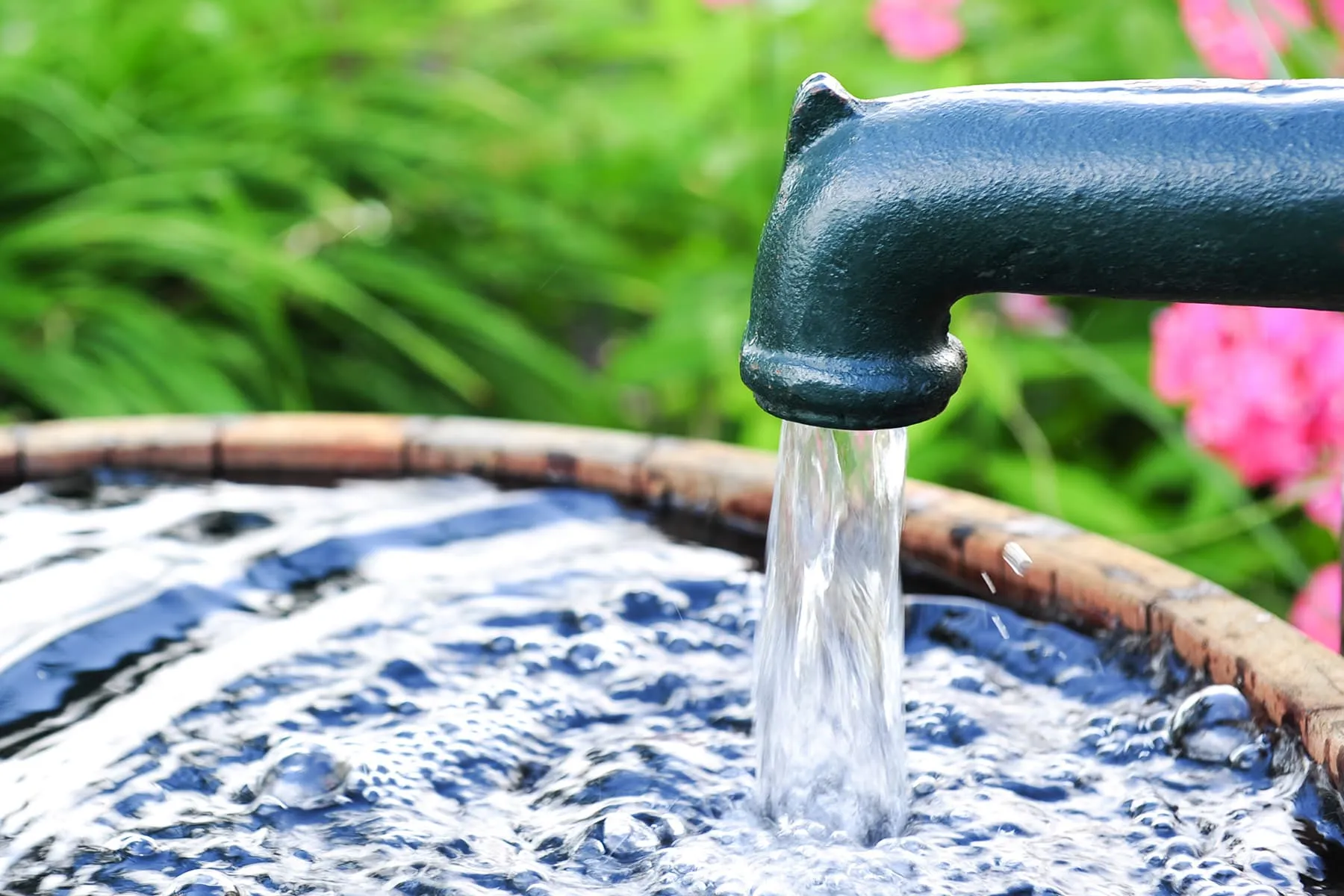
Water is one of the basic necessities for every living being and we cannot imagine a life without water. It is the natural resource and the main constituent of our planet earth. Water is the universal solvent and plays a key role in the existence of various forms of life on the planet earth. It is widely used for various purposes such as washing, bathing, cleaning, cooking, drinking, and other industrial and domestic uses.
Water is a colourless and odourless substance that is essential for the survival of living beings. There are various sources of water such as wells, rivers, ponds, lakes, oceans, big dams, and streams. As we all know, nearly 70 to 80 percent of the Earth’s surface is covered by water, among which only 1-2 per cent water is pure and suitable for human use.
Conservation of water mainly refers to protect, preserve, and control the usage of water and its resources. It is the system introduced to manage freshwater, reduce the wastage and protect the water and its resources in order to reduce and to avoid the scarcity. Therefore, we all should come forward to create awareness about conservation of water among our own friends, family, neighbours, society, etc. Conservation of water is very much essential as it saves life on earth.
By:
rupali
Tuesday, Jul 27, 2021
AGRI-FOOD SYSTEMS
+1

Leave a comment
The atomic nature of the elements
Paralleling the development of the concept of elements was an understanding of the nature of matter. At various times in history, matter has been considered to be either continuous or discontinuous. Continuous matter is postulated to be homogeneous and divisible without limit, each part exhibiting identical properties regardless of size. This was essentially the point of view taken by Aristotle when he associated his elemental qualities with continuous matter. Discontinuous matter, on the other hand, is conceived of as particulate—that is, divisible only up to a point, the point at which certain basic units called atoms are reached. According to this concept, also known as the atomic hypothesis, subdivision of the basic unit (atom) could give rise only to particles with profoundly different properties.
By:
rupali
Tuesday, Jul 27, 2021
AGRI-FOOD SYSTEMS
+1
Leave a comment
Solar System
The Solar System is the gravitationally bound system of the Sun and the objects that orbit it, either directly or indirectly. Of the objects that orbit the Sun directly, the largest are the eight planets, with the remainder being smaller objects, the dwarf planets and small Solar System bodies. Of the objects that orbit the Sun indirectly—the natural satellites—two are larger than the smallest planet, Mercury.
One of Billions. Our solar system is made up of a star, eight planets and countless smaller bodies …
Meet Me in the Orion Arm. Our solar system orbits the center of the Milky Way Galaxy at about …
A Long Way Round. It takes our solar system about 230 million years to complete one orbit around …
Spiraling Through Space. There are three general kinds of galaxies: elliptical, spiral and irregular.
By:
rupali
Friday, Jul 23, 2021
CULTURE AND SOCIETY
+1
Leave a comment
Polyploidy
Genomic analysis also has shown that one of the important mechanisms of evolution is multiplication of chromosome sets, resulting in polyploidy (“many genomes”). In plants and animals, spontaneous doubling of chromosomes can occur. In some plants, the chromosomes of two related species unite via cross-pollination to form a fusion product. This product is sterile because each chromosome needs a pairing partner in order for the plant to be fertile. However, the chromosomes of the fusion product can accidentally double, resulting in a new, fertile species. Wheat is an example of a plant that evolved by this means through a union between wild grasses, but a large proportion of plants went through similar ancestral polyploidization.
By:
rupali
Wednesday, Jul 21, 2021
HEALTH AND NUTRITION
+1

No Preview Available
Leave a comment
shoot systems
Entire shoot systems are often modified for such special functions as climbing, protection, adaptation to arid habitats, and water or food storage. The modifications generally involve structural and shape changes to the stem and the reduction of the leaves to small scales. Many of the modifications parallel those previously described for leaves. In the passion flower (Passiflora; Passifloraceae) and grape (Vitis vinifera; Vitaceae), axillary buds develop as tendrils with reduced leaves and suppressed axillary buds. In the grape these axillary tendrils are actually modified and reduced inflorescences. In the plant from which strychnine is obtained (Strychnos nux-vomica), the axillary buds develop into hooks for climbing.
By:
rupali
Monday, Jul 19, 2021
AGRI-FOOD SYSTEMS
+1

No Preview Available
Leave a comment
Asparagus ornamental plants
Asparagus, (genus Asparagus), genus of the family Asparagaceae with up to 300 species native from Siberia to southern Africa. Best known is the garden asparagus (Asparagus officinalis), cultivated as a vegetable.for its succulent spring stalks. Several African species are grown as ornamental plants.
Asparagus species may be erect or climbing, and most of the species are more or less woody. The rhizomelike, or sometimes tuberous, roots give rise to conspicuous fernlike branchlets. True leaves are reduced to small scales. Many species are dioecious (individuals are either male or female), and the small greenish yellow flowers in the spring are followed by red berries in the fall. Members of the genus are characterized by the presence of cladodes, which are leaflike organs in the axils of the true leaves.
By:
rupali
Friday, Jul 16, 2021
AGRI-FOOD SYSTEMS
+1

No Preview Available
Leave a comment
Article : Water substance composed of the chemical elements hydrogen and oxygen
Water, a substance composed of the chemical elements hydrogen and oxygen and existing in gaseous, liquid, and solid states. It is one of the most plentiful and essential compounds. A tasteless and odourless liquid at room temperature, it has the important ability to dissolve many other substances. Indeed, the versatility of water as a solvent is essential to live organisms. Life is believed to have originated in the aqueous solutions of the world’s oceans, and living organisms depend on aqueous solutions, such as blood and digestive juices, for biological processes. Water also exists on other planets and moons both within and beyond the solar system. In small quantities, water appears colourless, but water actually has an intrinsic blue colour caused by slight absorption of light at red wavelengths.
By:
Vijaya Super admin
Thursday, Jul 15, 2021
AGRI-FOOD SYSTEMS

Leave a comment
Ankylosing Spondylitis
arthritis causes painful inflammation in the spine. Over time, it may make your vertebrae -- the small bones of the spine -- fuse together. It can also inflame other joints, like hips and knees, and it can damage your eyes, heart, and other organs. There's no cure, but treatment and taking care of yourself can often slow it down or prevent it from getting worse
Ref: https://www.webmd.com/ankylosing-spondylitis/ss/slideshow-ankylosing-spondylitis-overview
By:
rupali
Monday, Jul 12, 2021
EDUCATION

No Preview Available
Leave a comment
Drink Enough water
It’s common to get a little constipated if you don’t drink enough water. Inactivity, diet changes, illness, and even stress can add to the problem. Constipation usually passes on its own, but you can help move things along with exercise, over-the-counter meds, and of course, water.
See a doctor if your constipation lasts for more than a week or two or you have dizziness, bad pain in your belly, or blood in your stool. These could be signs of something more serious.
Read more follow : https://www.webmd.com/a-to-z-guides/ss/slideshow-drink-enough-water
By:
rupali
Monday, Jul 12, 2021
AGRI-FOOD SYSTEMS
+1
No Preview Available
Leave a comment
Computer Games:
Computer Games: Computer games increase opportunities for responding and activeengagement and provide immediate feedback about accuracy. In addition, manystudents with ADHD find computer learning games highly reinforcing.
Student-Created Reviews Students can create ways of reviewing previously taught content. For example, they may create
questions and answers for a card game such as Go Fish or Concentration.
Frequent Redirection: Learning partners can be assigned to help each other stay ontask.
Transition Buddies: Transition buddies are helpful for students with ADHD whohave trouble refocusing their attention as they transition from one academic lesson tothe next. Further, verbal or nonverbal teacher cues signaling upcoming transitionshelp prepare students for changes in activities or lessons.
Seating Arrangements: Seat the student with ADHD away from distractions and close tothe teaching action.
By:
Hasha
Thursday, Jun 10, 2021
CULTURE AND SOCIETY
+2

Leave a comment
ADHD Students and Classroom Considerations
https://education.wm.edu/centers/ttac/documents/packets/adhd.pdf
The culture of the classroom can either support or create barriers to student success (Piffner,2011).
Factors that foster attention, positive behavior, and academic and social success includeestablishing positive relationships with students, adopting classroom management techniques,and creating a physical arrangement that facilitates learning.
It is often a positive relationship with one teacher that facilitates school success for a studentwith ADHD (Piffner, 2011).
When teachers connect with students and appreciate their unique skills and interests, students are more likely to strive for achievement and positively respond to classroom rules and procedures.
When using a proactive approach to classroom management, teachers support all students andcreate conditions that prepare them for learning (Piffner, 2011).
Some strategies for positive management include clear directions, meaningful feedback, and opportunities for collaboration with peers. Here are some others.
Opportunities to RespondStudents with ADHD often have the most trouble attending during drill-and-practice assignments because of the repetitive nature of the tasks. Peer-mediated approaches such as those enumerated in the next screens are particularly effective for students with ADHD in such cases, because they increase students’ opportunities for engagement and active learning (Piffner, 2011).
In creating peer-mediated activities, the teacher may need to choose students whoseskill levels complement each other. Students with and without attention difficulties andimpulsivity should be considered for peer partnerships.
Peer TutoringPeer tutoring is one of the more effective strategies for students with ADHD, because it provides many of the same supports as one-to-one instruction. It facilitates the acquisition of both academic and social skills.
Peer tutoring is most effective when training is provided to participating students (Piffner, 2011). Tutors need to be taught how to be prepared with materials needed for the session and howto give positive and corrective feedback to their partner (Greenwood & Delquadri,1995).
Cooperative LearningCarefully structured cooperative learning groups in which each student is assigned a role and has clear expectations for desired outcomes are very helpful for students with ADHD. The more structured the cooperative activity, the more likely it is that these students will succeed.Sharing Strategies Think, Pair, Share/Square Share/Group Share: Using thisapproach, students work with peer partners to discuss the lesson, check each other’swork, and share strategies.
By:
Anne miller chinthana
Thursday, Jun 10, 2021
AGRI-FOOD SYSTEMS
+5
Leave a comment
Organizational Supports for ADHD Students
https://youtu.be/sv5hK4crIRc
Primer text from the College of William & Mary.https://education.wm.edu/centers/ttac/documents/packets/adhd.pdf
Many students with ADHD have significant difficulties with organization.
They are more likely to respond positively when teachers establish class routines and set procedures and maintain a well-organized learning environment.
Clear rules and advanced planning are keys to success for teachers of students with ADHD.
The following organizational supports are particularly useful. Students should be taught to use these tools through teacher modeling and guided practice with feedback before being expected to use them more independently.
Assignment Notebook: Provide the student with an assignment notebook to helporganize homework and seatwork.Color-Coded Folders: Provide the student with color-coded folders to helporganize assignments for different academic subjects.Homework Partners: Assign the student a partner who can help record
By:
Jane Joew
Thursday, Jun 10, 2021
WATER, ENERGY, AND THE ENVIRONMENT

Leave a comment