AAP logoAAP logo
Results for "management"
9 Results
  • +3
    Generative AI, sometimes called gen AI, is artificial intelligence (AI) that can create original con
    Generative AI, sometimes called gen AI, is artificial intelligence (AI) that can create original content such as text, images, video, audio or software code in response to a user’s prompt or request.

    Generative AI relies on sophisticated machine learning models called deep learning models algorithms that simulate the learning and decision-making processes of the human brain. These models work by identifying and encoding the patterns and relationships in huge amounts of data, and then using that information to understand users' natural language requests or questions and respond with relevant new content.

    AI has been a hot technology topic for the past decade, but generative AI, and specifically the arrival of ChatGPT in 2022, has thrust AI into worldwide headlines and launched an unprecedented surge of AI innovation and adoption. Generative AI offers enormous productivity benefits for individuals and organizations, and while it also presents very real challenges and risks, businesses are forging ahead, exploring how the technology can improve their internal workflows and enrich their products and services. According to research by the management consulting firm McKinsey, one third of organizations are already using generative AI regularly in at least one business function.¹ Industry analyst Gartner projects more than 80% of organizations will have deployed generative AI applications or used generative AI application programming interfaces (APIs) by 2026.
    Posted by: AAP Bridge
    Loading..
  • +1
    chain with natural products
    The production chain with natural products has three major parts to consider. The
    fi rst is agricultural, followed by, for example, extraction to get a concentrated
    raw extract, and in pharmaceutical applications (not with cosmetics and nutraceuticals) a fi nal purifi cation step is necessary in order to get an ultrapure product.
    All the steps combined contribute to the overall yield and determine the fi nal
    economics.
    To highlight the importance of including the complete production chain, we
    can consider growing a crop of plants containing oleanoic acid. This is found in
    several plants (almond hulls, privet, rosemary, thyme, clove, lavender, olive, hawthorn, periwinkle etc.) with a content less than 1% in dry mass. Higher values
    were observed only with a different kind of sage. The value varies with location
    and local climate (e.g., Germany versus Greece), types of soil (sandy, thus irrigation needed), distance between the growing rows and cultivar. With the latter,
    higher content is with plants from scions obtained through vegetative reproduction ( Salvia offi cinalis ) compared with those from sowing ( S. lavendulifolia ).
    However, planting with scions is very labor - intensive, which has quite an impact
    in respect to labor costs, and sowing is then the alternative. Optimal conditions
    for sage are with warm and wind - protected sites, with a light soil containing
    compost and water. Dry periods are no major problem and the plants should
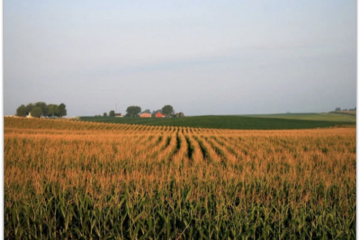
    grow in rows (distance 25 – 50 cm) as depicted in Figure 1.7 [15] . Usually, the
    useful life is four to fi ve years and for soil recovery a four - year interval is recommended. If the plants are used to gain pharmaceutical extracts, all cultivation steps
    (sowing, manuring etc.) must be documented and with pest management any
    pesticide (date, dosage etc.) must be registered. With sage the use of herbicides is
    forbidden and two cuts per year are recommended. After air classifi cation the
    leaves are dried and according to the Deutsches Arzneibuch only 2% impurities are
    Posted by: AAP Bridge
    Loading..
  • complete production chain and importance: natural products
    The production chain with natural products has three major parts to consider. The
    fi rst is agricultural, followed by, for example, extraction to get a concentrated
    raw extract, and in pharmaceutical applications (not with cosmetics and nutraceuticals) a fi nal purifi cation step is necessary in order to get an ultrapure product
    To highlight the importance of including the complete production chain, we
    can consider growing a crop of plants containing oleanoic acid. This is found in
    several plants (almond hulls, privet, rosemary, thyme, clove, lavender, olive, hawthorn, periwinkle etc.) with a content less than 1% in dry mass. Higher values
    were observed only with a different kind of sage. The value varies with location
    and local climate (e.g., Germany versus Greece), types of soil (sandy, thus irrigation needed), distance between the growing rows and cultivar. With the latter,
    higher content is with plants from scions obtained through vegetative reproduction ( Salvia offi cinalis ) compared with those from sowing ( S. lavendulifolia ).
    However, planting with scions is very labor - intensive, which has quite an impact
    in respect to labor costs, and sowing is then the alternative. Optimal conditions
    for sage are with warm and wind - protected sites, with a light soil containing
    compost and water. Dry periods are no major problem and the plants should
    grow in rows (distance 25 – 50 cm) as depicted in Figure 1.7 [15] . Usually, the
    useful life is four to fi ve years and for soil recovery a four - year interval is recommended. If the plants are used to gain pharmaceutical extracts, all cultivation steps
    (sowing, manuring etc.) must be documented and with pest management any
    pesticide (date, dosage etc.) must be registered. With sage the use of herbicides is
    forbidden and two cuts per year are recommended



    Posted by: AAP Bridge
    Loading..
  • loading playlist
    loading