

Results for "ou"
207 Results
The Water in You: Water and the Human Body
REF:https://www.usgs.gov/special-topic/water-science-school/science/water-you-water-and-human-body?qt-science_center_objects=0#qt-science_center_objects
The Water in You: Water and the Human Body
Water serves a number of essential functions to keep us all going
Think of what you need to survive, really just survive. Food? Water? Air? Facebook? Naturally, I'm going to concentrate on water here. Water is of major importance to all living things; in some organisms, up to 90% of their body weight comes from water. Up to 60% of the human adult body is water.
According to H.H. Mitchell, Journal of Biological Chemistry 158, the brain and heart are composed of 73% water, and the lungs are about 83% water. The skin contains 64% water, muscles and kidneys are 79%, and even the bones are watery: 31%.
Each day humans must consume a certain amount of water to survive. Of course, this varies according to age and gender, and also by where someone lives. Generally, an adult male needs about 3 liters (3.2 quarts) per day while an adult female needs about 2.2 liters (2.3 quarts) per day. All of the water a person needs does not have to come from drinking liquids, as some of this water is contained in the food we eat.
Water serves a number of essential functions to keep us all going
A vital nutrient to the life of every cell, acts first as a building material.
It regulates our internal body temperature by sweating and respiration
The carbohydrates and proteins that our bodies use as food are metabolized and transported by water in the bloodstream;
It assists in flushing waste mainly through urination
acts as a shock absorber for brain, spinal cord, and fetus
forms saliva
lubricates joints
By:
Scarlet Patrick
Wednesday, May 12, 2021
CULTURE AND SOCIETY
No Preview Available
Leave a comment
Test the article: youtube thumbnail
Test: An Introduction to the Ecological Model in Public Health of the "ecological model,
By:
Vijaya Super admin
Wednesday, May 12, 2021
WATER, ENERGY, AND THE ENVIRONMENT
+1
Leave a comment
Micro-credentials
The educator uses current research and resources aligned with global education to create a yearly resource plan. The educator identifies strategies and activities that support the global competence framework, and incorporates them into lessons, assignments, activities, or assessments.
Method Components
Educating a new generation of globally and culturally competent students is imperative. A clear framework for global competence requires students to engage in robust and rigorous exploration that includes investigating the world, recognizing perspectives, communicating ideas, and taking action.
Definition of Global Education
Global education helps students develop their capacity to be informed, open-minded, responsible people who are responsive to diverse perspectives. Global education prepares us to address the world’s most pressing issues collaboratively, equitably, and sustainably. Global education helps students understand that pressing issues must be faced in an interdisciplinary way, given the complexity of environments and competing needs and interests.
By:
Jayathilini Lakshika Hewapathirana
Wednesday, May 12, 2021
CULTURE AND SOCIETY
+1

Leave a comment
Venture capital :
The four-part framework (investigating the issue, recognizing perspectives, communicating ideas, taking action) incorporated into this micro-credential reflects the changing role of our students in the 21st century. Students must have a substantive understanding of the complex, diverse, and interdependent world in which they live. Educators will delve into the research that supports the students becoming globally competent through inquiry. The four-part framework is described below. Additional resources are available in the “Supporting Rationale and Research” section and should be examined prior to completing this micro-credential.
By:
Scarlet Patrick
Wednesday, May 12, 2021
AGRI-FOOD SYSTEMS
+1
Leave a comment
Global Competence Framework
The four-part framework (investigating the issue, recognizing perspectives, communicating ideas, taking action) incorporated into this micro-credential reflects the changing role of our students in the 21st century. Students must have a substantive understanding of the complex, diverse, and interdependent world in which they live. Educators will delve into the research that supports the students becoming globally competent through inquiry. The four-part framework is described below. Additional resources are available in the “Supporting Rationale and Research” section and should be examined prior to completing this micro-credential.
Investigate the worldStudents must engage in activities and explorations where they are able to investigate their world beyond their immediate environment. Research that is age-appropriate should be conducted where problems are framed that are significant at the local, regional, or global level.
By:
Jenny Reze Scarlet
Wednesday, May 12, 2021
AGRI-FOOD SYSTEMS
+2
Leave a comment
Outcomes of Global Education
Through global education, students will prepare to thrive and lead change in an interconnected world. Students will engage in dimensions of cultural diversity to reach common understandings and goals. Through a stronger awareness of global issues, students will be able to address today’s greatest challenges and make a difference in the world, both collaboratively and equitably.
Global Competence Framework
The four-part framework (investigating the issue, recognizing perspectives, communicating ideas, taking action) incorporated into this micro-credential reflects the changing role of our students in the 21st century. Students must have a substantive understanding of the complex, diverse, and interdependent world in which they live. Educators will delve into the research that supports the students becoming globally competent through inquiry. The four-part framework is described below. Additional resources are available in the “Supporting Rationale and Research” section and should be examined prior to completing this micro-credential.
By:
Scarlet Patrick Erinson
Wednesday, May 12, 2021
AGRI-FOOD SYSTEMS
+3
Leave a comment
Artificial intelligence
Artificial intelligence (AI), the ability of a digital computer or computer-controlled robot to perform tasks commonly associated with intelligent beings. The term is frequently applied to the project of developing systems endowed with the intellectual processes characteristic of humans, such as the ability to reason, discover meaning, generalize, or learn from past experience. Since the development of the digital computer in the 1940s, it has been demonstrated that computers can be programmed to carry out very complex tasks—as, for example, discovering proofs for mathematical theorems or playing chess—with great proficiency. Still, despite continuing advances in computer processing speed and memory capacity, there are as yet no programs that can match human flexibility over wider domains or in tasks requiring much everyday knowledge
By:
Vijaya Super admin
Wednesday, May 12, 2021
CULTURE AND SOCIETY
+3

Leave a comment
computer network
A computer network is a group of computers that use a set of common communication protocols over digital interconnections for the purpose of sharing resources located on or provided by the network nodes. The interconnections between nodes are formed from a broad spectrum of telecommunication network technologies, based on physically wired, optical, and wireless radio-frequency methods that may be arranged in a variety of network topologies.
The nodes of a computer network may include personal computers, servers, networking hardware, or other specialised or general-purpose hosts. Hostnames serve as memorable labels for the nodes, rarely changed after initial assignment. Network addresses serve for locating and identifying the nodes by communication protocols such as the Internet Protocol.
By:
rupali
Wednesday, May 12, 2021
YOUTH EMPOWERMENT
+1
No Preview Available
Leave a comment
Communication to Support Student Learning in a Digital Learning Environment
Communication to Support Student Learning in a Digital Learning Environment
Educator provides evidence of their understanding of communication and outlines and provides evidence of a lesson that uses technology to support students’ use of communication in learning.
Method Components
What are the 4Cs?
The 4Cs for 21st century learning are Creativity, Critical Thinking, Communication, and Collaboration. They are part of the framework for 21st Century Learning and are designed to support student learning in today’s world and are skills they can use in college and career.
By:
Lorell Sandi
Wednesday, May 12, 2021
YOUTH EMPOWERMENT

Leave a comment
The foundations of networking: switches, routers, and wireless access points
Switches, routers, and wireless access points are the essential networking basics. Through them, devices connected to your network can communicate with one another and with other networks, like the Internet. Switches, routers, and wireless access points perform very different functions in a network.
By:
rupali
Wednesday, May 12, 2021
EDUCATION

Leave a comment
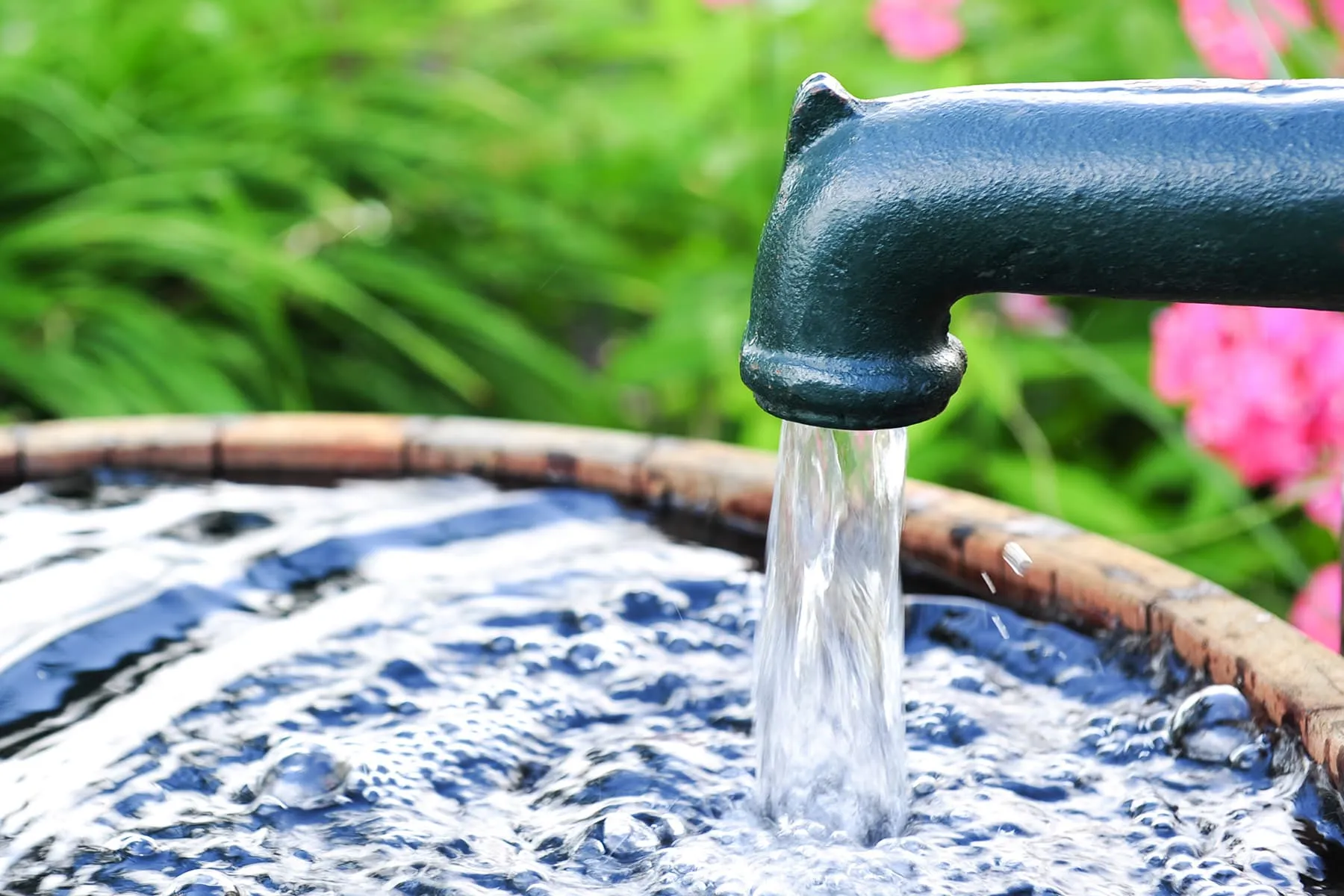
Drink enough water
It’s common to get a little constipated if you don’t drink enough water. Inactivity, diet changes, illness, and even stress can add to the problem. Constipation usually passes on its own, but you can help move things along with exercise, over-the-counter meds, and of course, water.
See a doctor if your constipation lasts for more than a week or two or you have dizziness, bad pain in your belly, or blood in your stool. These could be signs of something more serious.
Read more follow : https://www.webmd.com/a-to-z-guides/ss/slideshow-drink-enough-water
By:
Abira Grooz
Wednesday, May 12, 2021
WATER, ENERGY, AND THE ENVIRONMENT
+1
No Preview Available
Leave a comment
Communication to Support Student Learning in a Digital Learning Environmen
https://aap-uat.dokkuapps.venturit.org/knowledgenetwork/groups/knowledgenetwork/stories/1048
The P21 framework emphasizes effective use of oral, written, and nonverbal communication skills for multiple purposes (e.g., to inform, instruct, motivate, persuade, and share ideas). It also focuses on effective listening, using technology to communicate, and being able to evaluate the effectiveness of communication efforts—all within diverse contexts (adapted from P21). Note that working in partners is a great way to collaborate or build shared understanding but a critical part of communication is sharing with an authentic audience.
By:
Abira Grooz
Wednesday, May 12, 2021
CULTURE AND SOCIETY
No Preview Available

Leave a comment