

Results for "culture"
158 Results
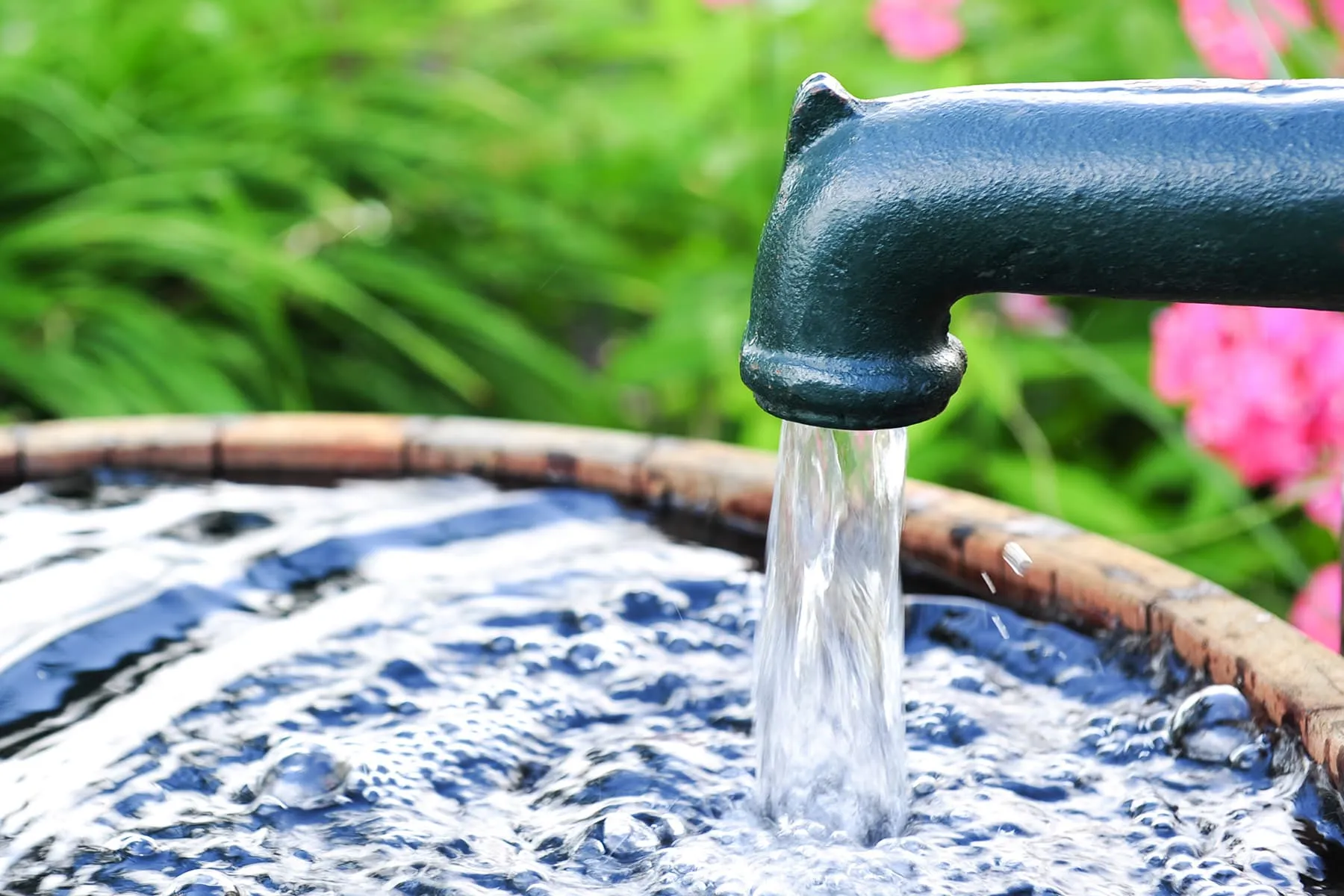
The Water in You: Water and the Human Body
REF:https://www.usgs.gov/special-topic/water-science-school/science/water-you-water-and-human-body?qt-science_center_objects=0#qt-science_center_objects
The Water in You: Water and the Human Body
Water serves a number of essential functions to keep us all going
Think of what you need to survive, really just survive. Food? Water? Air? Facebook? Naturally, I'm going to concentrate on water here. Water is of major importance to all living things; in some organisms, up to 90% of their body weight comes from water. Up to 60% of the human adult body is water.
According to H.H. Mitchell, Journal of Biological Chemistry 158, the brain and heart are composed of 73% water, and the lungs are about 83% water. The skin contains 64% water, muscles and kidneys are 79%, and even the bones are watery: 31%.
Each day humans must consume a certain amount of water to survive. Of course, this varies according to age and gender, and also by where someone lives. Generally, an adult male needs about 3 liters (3.2 quarts) per day while an adult female needs about 2.2 liters (2.3 quarts) per day. All of the water a person needs does not have to come from drinking liquids, as some of this water is contained in the food we eat.
Water serves a number of essential functions to keep us all going
A vital nutrient to the life of every cell, acts first as a building material.
It regulates our internal body temperature by sweating and respiration
The carbohydrates and proteins that our bodies use as food are metabolized and transported by water in the bloodstream;
It assists in flushing waste mainly through urination
acts as a shock absorber for brain, spinal cord, and fetus
forms saliva
lubricates joints
By:
Scarlet Patrick
Wednesday, May 12, 2021
CULTURE AND SOCIETY

No Preview Available
Leave a comment
Test article: Link preview
Read more follow : https://www.webmd.com/a-to-z-guides/ss/slideshow-drink-enough-watertest article
By:
Vijaya Super admin
Wednesday, May 12, 2021
CULTURE AND SOCIETY
+1
No Preview Available
Leave a comment
Micro-credentials
The educator uses current research and resources aligned with global education to create a yearly resource plan. The educator identifies strategies and activities that support the global competence framework, and incorporates them into lessons, assignments, activities, or assessments.
Method Components
Educating a new generation of globally and culturally competent students is imperative. A clear framework for global competence requires students to engage in robust and rigorous exploration that includes investigating the world, recognizing perspectives, communicating ideas, and taking action.
Definition of Global Education
Global education helps students develop their capacity to be informed, open-minded, responsible people who are responsive to diverse perspectives. Global education prepares us to address the world’s most pressing issues collaboratively, equitably, and sustainably. Global education helps students understand that pressing issues must be faced in an interdisciplinary way, given the complexity of environments and competing needs and interests.
By:
Jayathilini Lakshika Hewapathirana
Wednesday, May 12, 2021
CULTURE AND SOCIETY
+1

Leave a comment
Venture capital :
The four-part framework (investigating the issue, recognizing perspectives, communicating ideas, taking action) incorporated into this micro-credential reflects the changing role of our students in the 21st century. Students must have a substantive understanding of the complex, diverse, and interdependent world in which they live. Educators will delve into the research that supports the students becoming globally competent through inquiry. The four-part framework is described below. Additional resources are available in the “Supporting Rationale and Research” section and should be examined prior to completing this micro-credential.
By:
Scarlet Patrick
Wednesday, May 12, 2021
AGRI-FOOD SYSTEMS
+1
Leave a comment
THE CULTURAL CONTEXT OF HOME CARE
Culture affects the day-to-day organization of care. Consider the idea of a partnership between families and nurses sought by home health care agencies. Agencies rightly recognize that optimal self-management of disease and a person’s return to function depends on a reasonable division of labor, shared information, and the willingness of family caregivers to learn rehabilitation and nursing protocols, medication administration, the use of assistive technologies, and the like (Wolff et al., 2009). But a family’s involvement may depend on how they define this partnership and, in particular, whether or not the home health care provider is considered part of the family (Knox and Thobaben, 1997; McGarry, 2009). Similar effects of culture may be evident in the willingness of families to accept telehealth technology, express their degree of burden or need for help, or seek hospice care at the end of life.
By:
rupali
Wednesday, May 12, 2021
CULTURE AND SOCIETY
+2

Leave a comment
Artificial intelligence
Artificial intelligence (AI), the ability of a digital computer or computer-controlled robot to perform tasks commonly associated with intelligent beings. The term is frequently applied to the project of developing systems endowed with the intellectual processes characteristic of humans, such as the ability to reason, discover meaning, generalize, or learn from past experience. Since the development of the digital computer in the 1940s, it has been demonstrated that computers can be programmed to carry out very complex tasks—as, for example, discovering proofs for mathematical theorems or playing chess—with great proficiency. Still, despite continuing advances in computer processing speed and memory capacity, there are as yet no programs that can match human flexibility over wider domains or in tasks requiring much everyday knowledge
By:
Vijaya Super admin
Wednesday, May 12, 2021
CULTURE AND SOCIETY
+3

Leave a comment
Response Accommodations
Response Accommodations
The educator uses a set of guiding questions to identify one response accommodation for a student with a disability based on his or her individual learning strengths and needs and the barrier created by the disability. The educator then implements the accommodation and evaluates its effectiveness.
Method Components
This micro-credential, one of four in the Accommodations stack, addresses response accommodations. These micro-credentials are consistent with the Individuals with Disabilities Education Improvement Act (IDEA) requirements, and are therefore relevant to students in grades K-12 with disabilities.
Educators should understand that students with disabilities often encounter barriers when they access the general education curriculum. The Every Student Succeeds Act (ESSA) and the Individuals with Disabilities Education Improvement Act (IDEA) require that educators provide appropriate
By:
Lorell Sandi
Wednesday, May 12, 2021
CULTURE AND SOCIETY
+1
Leave a comment
Communication to Support Student Learning in a Digital Learning Environmen
https://aap-uat.dokkuapps.venturit.org/knowledgenetwork/groups/knowledgenetwork/stories/1048
The P21 framework emphasizes effective use of oral, written, and nonverbal communication skills for multiple purposes (e.g., to inform, instruct, motivate, persuade, and share ideas). It also focuses on effective listening, using technology to communicate, and being able to evaluate the effectiveness of communication efforts—all within diverse contexts (adapted from P21). Note that working in partners is a great way to collaborate or build shared understanding but a critical part of communication is sharing with an authentic audience.
By:
Abira Grooz
Wednesday, May 12, 2021
CULTURE AND SOCIETY
No Preview Available
Leave a comment
Communication to Support Student Learning in a Digital Learning Environment
The P21 framework emphasizes effective use of oral, written, and nonverbal communication skills for multiple purposes (e.g., to inform, instruct, motivate, persuade, and share ideas). It also focuses on effective listening, using technology to communicate, and being able to evaluate the effectiveness of communication efforts—all within diverse contexts (adapted from P21). Note that working in partners is a great way to collaborate or build shared understanding but a critical part of communication is sharing with an authentic audience.
Example strategies that use technology to support communication in the classroom:
Host a TED-style conference or showcases for your students to present original ideas on a topic of interest to them to an authentic, external audience. Record and post the videos to a youtube stream.
Provide opportunities to listen and ask questions through back channel tools like Today’s Meet or even Twitter.
Have your students publish their work through blogs, by creating websites, and by building other online resources that are shared with authentic audiences.
By:
Rose Hozw
Wednesday, May 12, 2021
CULTURE AND SOCIETY
+1

Leave a comment
Education
Educator Reflection
What is communication (and what isn’t it)?
The P21 framework emphasizes effective use of oral, written, and nonverbal communication skills for multiple purposes (e.g., to inform, instruct, motivate, persuade, and share ideas). It also focuses on effective listening, using technology to communicate, and being able to evaluate the effectiveness of communication efforts—all within diverse contexts (adapted from P21). Note that working in partners is a great way to collaborate or build shared understanding but a critical part of communication is sharing with an authentic audience.
By:
Abira Grooz
Wednesday, May 12, 2021
CULTURE AND SOCIETY
+2

Leave a comment
Agri and food Scholar
Ref: https://aap-testing.dokkuapps.venturit.org/posts/898/editDeveloped by a team of professional educators, including a cadre of Pre-K to Grade 12 teachers, academics and leading educational consultants, this web resource attempts to infuse technology and teaching.
Useful resources include lesson plans, worksheets, rubrics, educational games and teacher tools. There are comprehensive sets of tutorials on different themes such as language, arts, science, and social studies which will appeal to both experienced and new teachers.
By:
Vijaya Super admin
Wednesday, May 12, 2021
CULTURE AND SOCIETY
No Preview Available
Leave a comment
Risk
Everyone feels a certain way about risk. Some are risk-oriented, others are risk-averse. Talking about risks seems to generate some good conversation. You could ask questions like:
What is your definition of risk?
Are you a risk taker? Why/why not?
What are the advantages/disadvantages of taking risks?
What risks do you come across in your work/life?
What risks have you taken in your life?
By:
Vijaya Super admin
Wednesday, May 12, 2021
AGRI-FOOD SYSTEMS
+2

Leave a comment