

Results for "ai"
39 Results
10 TIPS FOR MAINTAINING A HEALTHY LIFESTYLE AND BODY WEIGHT
At this extreme moment, we began working from home, away from campus, and keeping social distance for as many people as possible. As we stay home and are stuck with the foods that have been in our fridge or pantry for a while, we are temporarily living a sedentary lifestyle with increased odds of physical inactivity, excessive eating and sitting, stress, anxiety, and depression. In particular, many of us will gain some weight during the pandemic and may keep the extra weight permanently, which may carry considerable health risks for type 2 diabetes, hypertension, heart attack, stroke, and other health problems.
Here, I’d like to share some basic tips and resources for how to maintain your healthy lifestyle, body weight, and overall well-being while staying home and engaging in social distancing.
Measure and Watch Your Weight
Keeping track of your body weight on a daily or weekly basis will help you see what you’re losing and/or what you’re gaining.
Limit Unhealthy Foods and Eat Healthy Meals
Do not forget to eat breakfast and choose a nutritious meal with more protein and fiber and less fat, sugar, and calories. For more information on weight-control foods and dietary recommendations, please check the following website: www.hsph.harvard.edu/obesity-prevention-source/obesity-causes/diet-and-weight/.
Take Multivitamin Supplements
To make sure you have sufficient levels of nutrients, taking a daily multivitamin supplement is a good idea, especially when you do not have a variety of vegetables and fruits at home. Many micronutrients are vital to your immune system, including vitamins A, B6, B12, C, D, and E, as well as zinc, iron, copper, selenium, and magnesium. However, there’s currently NO available evidence that adding any supplements or “miracle mineral supplements” to your diet will help protect you from the virus or increase recovery. In some cases, high doses of vitamins can be bad for your health.
Drink Water and Stay Hydrated, and Limit Sugared Beverages
Drink water regularly to stay healthy, but there is NO evidence that drinking water frequently (e.g. every 15 minutes) can help prevent any viral infection. For more information on drinking water and coronavirus, please check the following EPA website: www.epa.gov/coronavirus/coronavirus-and-drinking-water-and-wastewater.
By:
Vijayalaxmi Santosh Mhetre
Friday, May 9, 2025
CULTURE AND SOCIETY
+3

Leave a comment
Peer tutoring is most effective when training is provided to participating students (Piffner, 2011).
Peer tutoring is most effective when training is provided to participating students (Piffner, 2011). Tutors need to be taught how to be prepared with materials needed for the session and howto give positive and corrective feedback to their partner (Greenwood & Delquadri,1995).
Cooperative LearningCarefully structured cooperative learning groups in which each student is assigned a role and has clear expectations for desired outcomes are very helpful for students with ADHD. The more structured the cooperative activity, the more likely it is that these students will succeed.
By:
Jenniffer
Wednesday, Mar 5, 2025
CULTURE AND SOCIETY
+1

Leave a comment
The additional content remains visible until the hover or focus trigger is removed, the user dismiss
Additional content that appears and disappears in coordination with keyboard focus or pointer hover often leads to accessibility issues. Reasons for such issues include:
the user may not have intended to trigger the interaction
the user may not know new content has appeared
the new content may intefere with a user's ability to do a task
Examples of such interactions can include custom tooltips, sub-menus and other nonmodal popups which display on hover and focus. The intent of this success criterion is to ensure that authors who cause additional content to appear and disappear in this manner must design the interaction in such a way that users can:
perceive the additional content AND
dismiss it without disrupting their page experience.
There are usually more predictable and accessible means of adding content to the page, which authors are recommended to employ. If an author does choose to make additional content appear and disappear in coordination with hover and keyboard focus, this success criterion specifies three conditions that must be met:
dismissable
hoverable
persistent
Each of these is discussed in a separate section.
By:
Vijayalaxmi Santosh Mhetre
Tuesday, Nov 12, 2024
CULTURE AND SOCIETY

Leave a comment
Artificial Intelligence
AI (Artificial Intelligence) is the ability of a machine to perform cognitive functions as humans do, such as perceiving, learning, reasoning, and solving problems. The benchmark for AI is the human level concerning in teams of reasoning, speech, and vision.
Introduction to AI Levels
Narrow AI: A artificial intelligence is said to be narrow when the machine can perform a specific task better than a human. The current research of AI is here now
General AI: An artificial intelligence reaches the general state when it can perform any intellectual task with the same accuracy level as a human would
Strong AI: An AI is strong when it can beat humans in many tasks
By:
richa tripathi
Friday, Aug 20, 2021
EDUCATION
Leave a comment
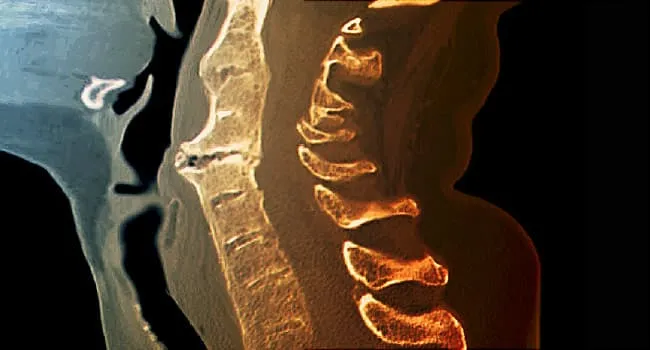
Ankylosing Spondylitis
arthritis causes painful inflammation in the spine. Over time, it may make your vertebrae -- the small bones of the spine -- fuse together. It can also inflame other joints, like hips and knees, and it can damage your eyes, heart, and other organs. There's no cure, but treatment and taking care of yourself can often slow it down or prevent it from getting worse
Ref: https://www.webmd.com/ankylosing-spondylitis/ss/slideshow-ankylosing-spondylitis-overview
By:
rupali
Monday, Jul 12, 2021
EDUCATION
No Preview Available
Leave a comment
Cultural anthropology
Cultural anthropology is that major division of anthropology that explains culture in its many aspects. It is anchored in the collection, analysis, and explanation (or interpretation) of the primary data of extended ethnographic field research. This discipline, both in America and in Europe, has long cast a wide net and includes various approaches. It has produced such collateral approaches as culture-and-personality studies, culture history, cultural ecology, cultural materialism, ethnohistory, and historical anthropology. These subdisciplines variously exploit methods from the sciences and the humanities. Cultural anthropology has become a family of approaches oriented by the cultural concept.
By:
rupali
Thursday, Jun 3, 2021
EDUCATION

Leave a comment
Ecosystem Services: Examples
Without ecosystem services, life on Earth as we know it wouldn’t exist. There are four main categories of ecosystem services:
Provisioning services refer to the products secured by ecosystems. These include:
• Water
• Food (including cattle and seafood)
• Pharmaceuticals, biochemicals, and industrial products
• Energy (sunlight, hydropower, biomass)
Regulating services are the ecosystem services that allow the regulation of ecosystem processes such as:
• Climate regulation (and carbon absorption and storage via the oceans, trees, soil)
• Waste decomposition (one of the most essential microbial process happening in soil)
• Crop pollination (performed by agents such as bees that contribute to the reproduction of flowering plants)
• Water and air purification and regulation
• Control of pests and diseases
Supporting and habitat services refer to the ability of ecosystems to give habitat for migratory species and to support the viability of gene-pools.This is possible thanks to:
• Primary reproduction
• Nutrient and seed dispersal
Cultural services are the benefits ecosystem services bring to humans. Examples of these are:
• Inspiration for intellectual (creativity), cultural (entertainment) and spiritual (why) purposes
– Remember how it feels good to seeing and hearing wild birds
– Animals, plants and even the funghi kingdom serve as inspiration in theaters, movies…
– Many people go to natural sites when they want to be alone or reflect about life
• Recreational experiences such as outdoors activities or ecotourism
By:
rupali
Wednesday, May 12, 2021
WATER, ENERGY, AND THE ENVIRONMENT
+1
Leave a comment
Communication to Support Student Learning in a Digital Learning Environment
Key Method
Educator provides evidence of their understanding of communication and outlines and provides evidence of a lesson that uses technology to support students’ use of communication in learning.
Method Components
What are the 4Cs?
The 4Cs for 21st century learning are Creativity, Critical Thinking, Communication, and Collaboration. They are part of the framework for 21st Century Learning and are designed to support student learning in today’s world and are skills they can use in college and career.
What is communication (and what isn’t it)?
The P21 framework emphasizes effective use of oral, written, and nonverbal communication skills for multiple purposes (e.g., to inform, instruct, motivate, persuade, and share ideas). It also focuses on effective listening, using technology to communicate, and being able to evaluate the effectiveness of communication efforts—all within diverse contexts (adapted from P21). Note that working in partners is a great way to collaborate or build shared understanding but a critical part of communication is sharing with an authentic audience.
Example strategies that use technology to support communication in the classroom:
Host a TED-style conference or showcases for your students to present original ideas on a topic of interest to them to an authentic, external audience. Record and post the videos to a youtube stream.
Provide opportunities to listen and ask questions through back channel tools like Today’s Meet or even Twitter.
Have your students publish their work through blogs, by creating websites, and by building other online resources that are shared with authentic audiences.
For other ideas see the resources below.
View Printable Version
By:
Jen Martins Henzansanath
Wednesday, May 12, 2021
CULTURE AND SOCIETY
+2

No Preview Available
Leave a comment
Test the article: youtube thumbnail
Test: An Introduction to the Ecological Model in Public Health of the "ecological model,
By:
Vijaya Super admin
Wednesday, May 12, 2021
WATER, ENERGY, AND THE ENVIRONMENT
+1
Leave a comment
Artificial intelligence
Artificial intelligence (AI), the ability of a digital computer or computer-controlled robot to perform tasks commonly associated with intelligent beings. The term is frequently applied to the project of developing systems endowed with the intellectual processes characteristic of humans, such as the ability to reason, discover meaning, generalize, or learn from past experience. Since the development of the digital computer in the 1940s, it has been demonstrated that computers can be programmed to carry out very complex tasks—as, for example, discovering proofs for mathematical theorems or playing chess—with great proficiency. Still, despite continuing advances in computer processing speed and memory capacity, there are as yet no programs that can match human flexibility over wider domains or in tasks requiring much everyday knowledge
By:
Vijaya Super admin
Wednesday, May 12, 2021
CULTURE AND SOCIETY
+3

Leave a comment
Robotic Technology Designs Phase
This paper attempts to show the main aspects which have given evolution to the development of a device belonging to a new pedagogic strategy called educational robotics. We present how starting from the basic design requirements expressed, and after applying a rigorous and methodological design process
Digital marketing is the use of the Internet to reach consumers. Digital marketing is a broad field, including attracting customers via email, content marketing, search platforms, social media,
By:
Jenson Winston
Wednesday, May 12, 2021
HEALTH AND NUTRITION
+1

Leave a comment
Risk
Everyone feels a certain way about risk. Some are risk-oriented, others are risk-averse. Talking about risks seems to generate some good conversation. You could ask questions like:
What is your definition of risk?
Are you a risk taker? Why/why not?
What are the advantages/disadvantages of taking risks?
What risks do you come across in your work/life?
What risks have you taken in your life?
By:
Vijaya Super admin
Wednesday, May 12, 2021
AGRI-FOOD SYSTEMS
+2


Leave a comment